

The Cleaning Products Worth Choosing Carefully — And What to Avoid
About this post
A guide to what the VOC research actually says about household cleaning products and indoor air quality—which ingredients and formats to avoid (fragrance, aerosols, bleach-ammonia mixes) and what to choose instead for a home that's clean without compromising your health.
Posted by
Meg from UrbanTags
- Wellbeing
- City life
Book a treatment at home
Share
There's a quiet irony in cleaning: the products meant to make your home healthier can, in the wrong combination or with frequent use, work against that goal. This isn't a fringe concern — it's a growing body of indoor air quality research.
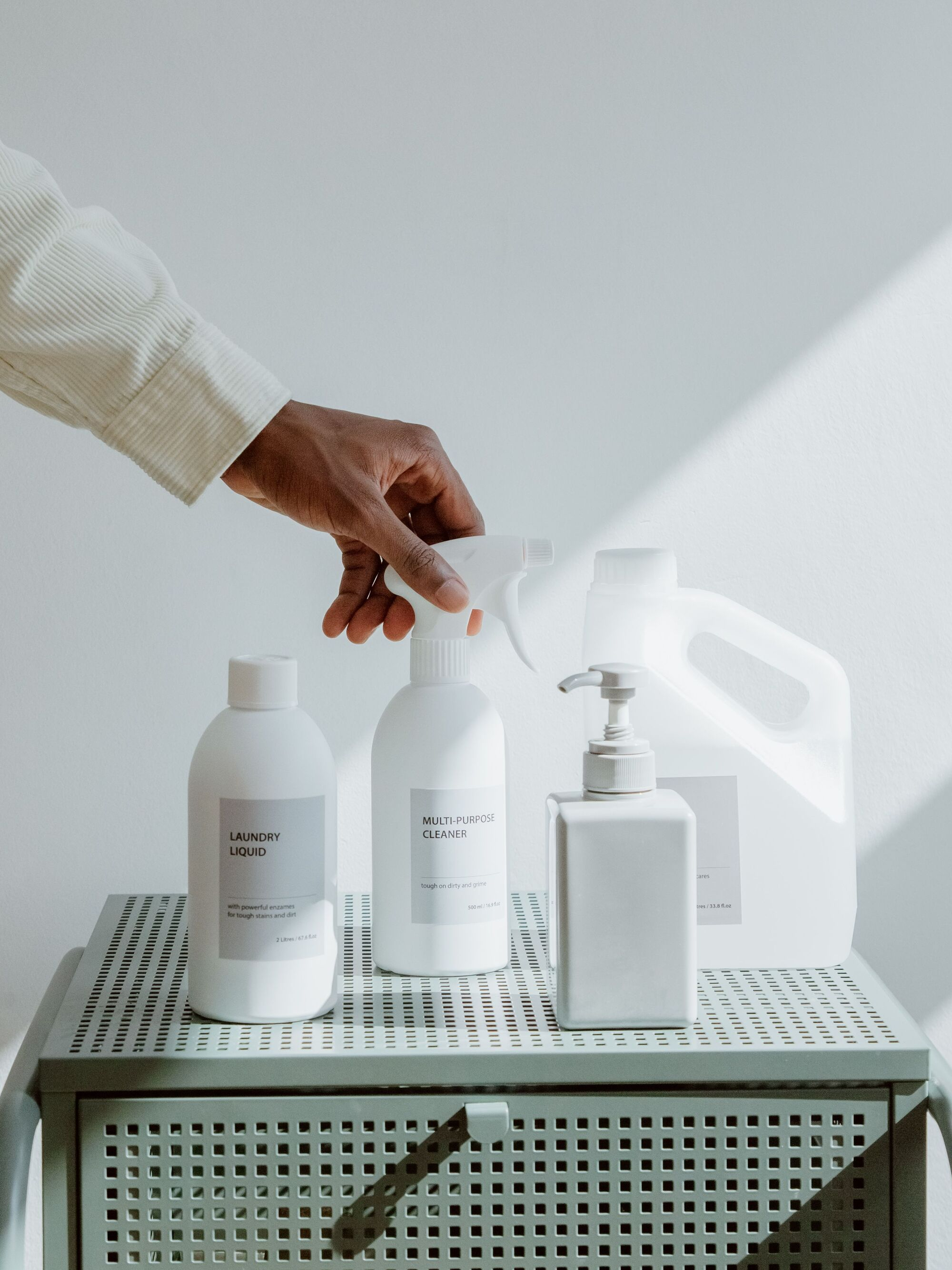
Your cleaning cupboard is a bigger source of indoor air pollution than most people realise
A 2023 peer-reviewed study by the Environmental Working Group tested 30 common household cleaning products — multipurpose cleaners, glass cleaners, and air fresheners among them — and detected 530 distinct volatile organic compounds (VOCs) across the sample. Of those, 193 were classified as hazardous, with documented links to respiratory damage, developmental effects, and increased cancer risk.
The same study found a clear pattern by product type: "green" fragrance-free products released an average of just 4 hazardous VOCs, fragranced green products released around 15, and conventional products released around 22 — roughly five times as many as their unscented, green counterparts.
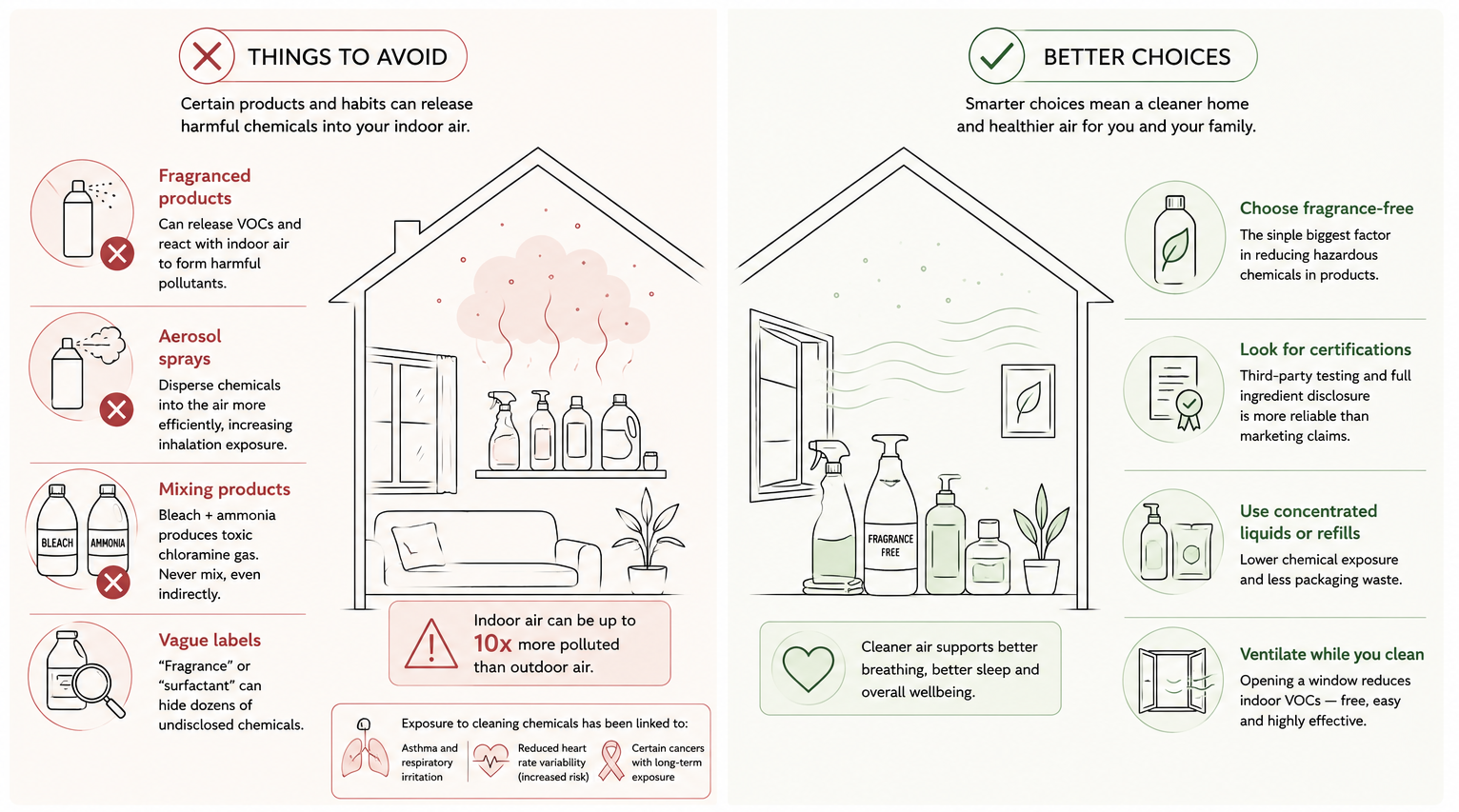
The US EPA notes that VOC concentrations indoors are consistently higher — up to ten times higher — than outdoors, precisely because products like these are used and stored in enclosed spaces. And the effect isn't purely occupational: research published in the journal Indoor Air found that the general, non-occupational use of cleaning sprays was linked to higher asthma symptom scores, and that long-term frequent use of scented cleaning and air-freshening products was associated with reduced heart rate variability — a marker linked to increased cardiovascular risk, particularly in people with pre-existing respiratory conditions.
The professional cleaning workforce shows us the extreme version of this risk
Because professional cleaners are exposed to these compounds far more often and in more concentrated form, occupational health research on this group gives a useful preview of cumulative effects. People working in professional cleaning have documented rates of asthma roughly 50% higher, and chronic obstructive pulmonary disease roughly 43% higher, than the general working population — with women in the industry also showing elevated lung cancer risk. It's a sobering reminder that "just cleaning" is not chemically neutral, even for the people doing it as a job.
What to actually avoid
A few categories consistently show up as the biggest offenders in the research:
Fragranced products generally — including "natural" scents like citrus, which can react with ozone in indoor air to form secondary pollutants such as formaldehyde, according to the American Lung Association.
Aerosol sprays — these disperse VOCs into the air more efficiently than liquid or gel formats, increasing inhalation exposure.
Bleach combined with ammonia-based products (including many glass cleaners) — this combination produces toxic chloramine gas and should never be mixed, even accidentally through sequential use on the same surface.
Products with vague ingredient labelling — cleaning products aren't required to disclose full ingredient lists in the way cosmetics are in many markets, so "fragrance" or "surfactant" on a label can conceal dozens of undisclosed compounds.
What to look for instead
Fragrance-free formulations — the EWG research found this was the single biggest factor separating low-VOC products from high-VOC ones, more so than "green" branding alone.
Third-party certified products — certifications that require full ingredient disclosure and VOC testing are a more reliable signal than marketing language like "natural" or "eco," which are largely unregulated terms.
Concentrated liquids or refillable formats over aerosols, which reduces both chemical exposure and packaging waste.
Ventilation as a non-negotiable habit — opening a window while cleaning measurably reduces indoor VOC concentration regardless of which product you're using, and it's the simplest, free intervention available.
The wellbeing case for getting this right
The whole appeal of a clean home is that it's supposed to be a calmer, healthier environment. Choosing products that quietly undermine indoor air quality works against that goal — for you, for children (whose smaller lungs and higher breathing rates increase relative exposure), and for anyone in the household with asthma or respiratory sensitivity. A few minutes spent checking a label is a small trade for not turning "cleaning" into a source of the very air-quality problem it's meant to solve.
Sources
Environmental Working Group (2023). Cleaning products emit hundreds of hazardous chemicals — published in Chemosphere.
US EPA — Volatile Organic Compounds' Impact on Indoor Air Quality.
American Lung Association — Cleaning Supplies and Household Chemicals.
Indoor Air journal — VOCs in cleaning/sanitizing products and health outcomes.
Occupational health research on asthma and COPD prevalence among professional cleaners.
Discover the easy way to book cleaning services, as well as at-home clinic and spa treatments with the Urban app.
Book on-demand servicesBook a standard or deep clean, from 7am to 11pm, 7 days a week.
Book a home clean